Windy Hill Partners Back to Site
Process Improvement & Organizational Change

Why Business Transformation Fails — And How to Get It Right

The most expensive consulting engagement isn't the one that costs the most. It's the one that changes the least.

By Windy Hill Partners  |  Lean Six Sigma Perspectives

Every year, organizations spend billions on business transformation. McKinsey, Deloitte, Accenture, and a constellation of boutique firms promise breakthrough results. Yet study after study finds that 60–70% of large-scale transformation efforts fail to achieve their stated objectives — not because the consultants lacked credentials, and not because the methodology was flawed. They fail because the approach was fundamentally wrong from the start.

This post is for the operations leader, the CFO, the COO — anyone who has watched a multi-million dollar initiative consume two years and three project managers, only to end with a 200-page report gathering dust on a shared drive. There is a better way. But first, let's understand what separates the firms that actually deliver from those that simply bill.

"The goal isn't transformation. The goal is sustainable improvement — change that your people own, understand, and continue long after the engagement ends."

Windy Hill Partners

What Separates Elite Consulting Firms from the Rest

Not all consultants are created equal. Whether you're evaluating a Big Four firm or a specialized boutique, certain qualities consistently define organizations that produce lasting results versus those that produce impressive slide decks.

Rigorous Diagnostic, Not Prescriptive Templates

Elite firms resist the temptation to apply the same playbook to every client. They invest in understanding the specific operational, cultural, and process context before recommending anything. A mortgage servicer's bottlenecks look nothing like a hospital system's — and the intervention shouldn't either.

Structured Methodology with Real Flexibility

The best firms operate within a defined framework — DMAIC, Lean, or a blended approach — but apply it with professional judgment. Methodology provides consistency and rigor; wisdom determines where to push and where to simplify. Frameworks are tools, not straitjackets.

Capability Building, Not Dependency Creation

The firms that do right by their clients deliberately make themselves less necessary over time. They train internal champions, certify belts, and transfer knowledge rather than hoarding it. A successful engagement ends with the client able to continue the work independently.

Measurable, Financially Documented Results

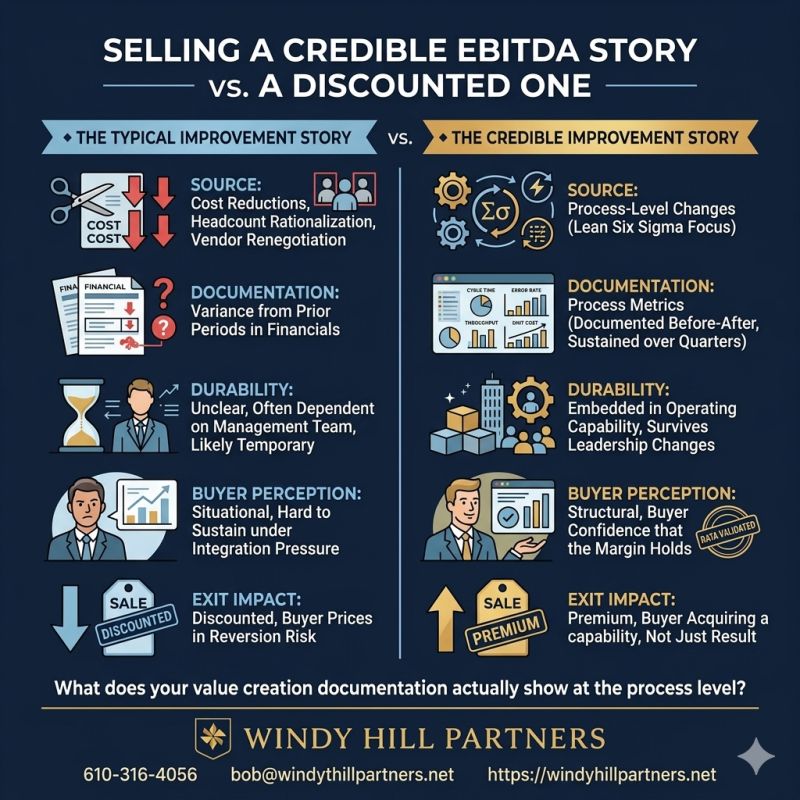
Great consulting work leaves a financial fingerprint. Cycle time reductions, error rate improvements, capacity recovered — all documented, all tied to business impact. If a firm can't show you the math behind their claimed results, keep looking.

Proven Sector Experience

Understanding the language, regulatory environment, and operational realities of an industry dramatically shortens the learning curve. A consultant who has never worked in healthcare will spend your money learning what a seasoned practitioner already knows.

Honest Scoping and Prioritization

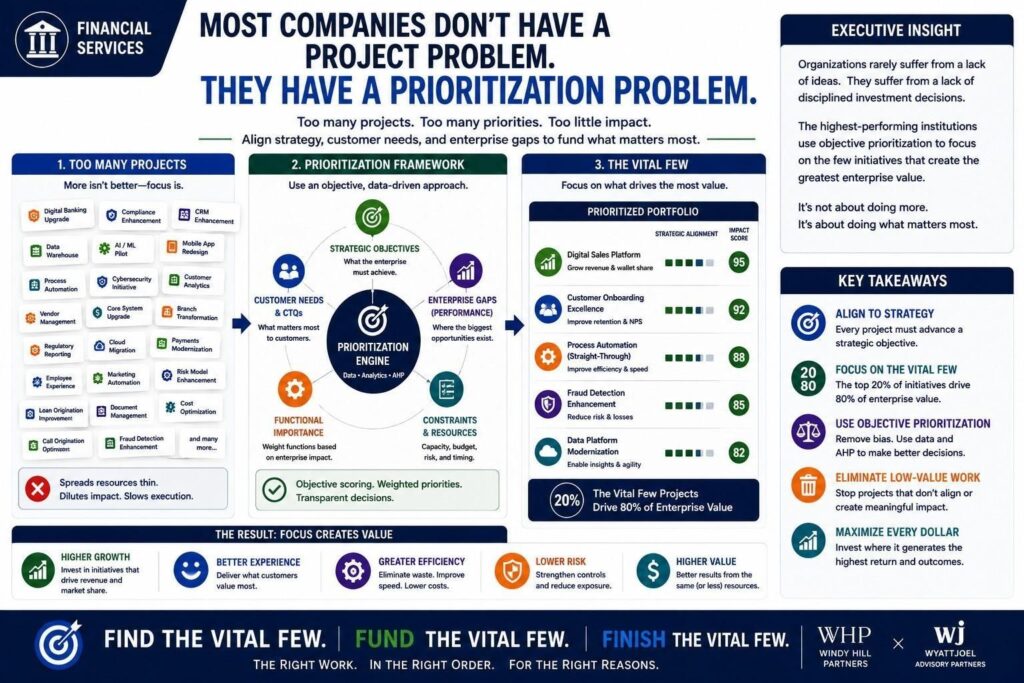
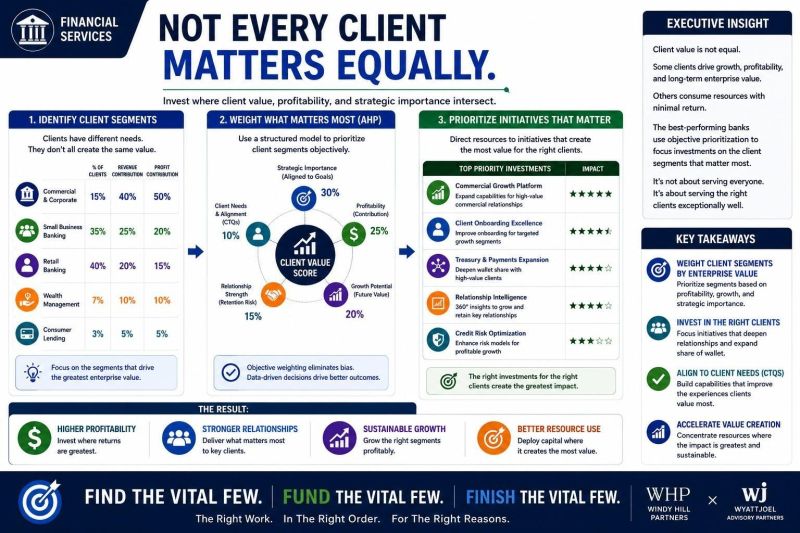
The best advisors push back when a client wants to boil the ocean. They help leadership identify the highest-leverage opportunities and pursue those first — building momentum before expanding scope. Intellectual courage to say "not that, not yet" is a rare and valuable trait.

The Cost Reality: What You're Actually Buying

The consulting industry spans an enormous range of price points — and the relationship between fees paid and results achieved is far weaker than most buyers assume. Understanding what drives cost differences is essential to making a smart investment.

Large, brand-name firms — the McKinseys, BCGs, and Big Four strategy practices — carry formidable overhead: global offices, intensive recruiting pipelines, partner compensation structures, and marketing machinery. Those costs flow directly to the client. A senior partner from a top-tier firm may carry a daily rate of $10,000–$20,000 or more. A project team of four for six months can easily exceed $1.5–2.5 million, with the majority of hands-on work performed by junior associates who were still in school three years ago.

Boutique and specialized firms occupy a fundamentally different cost structure. Lower overhead, direct practitioner access, and efficient delivery translate to fees that are often 40–70% lower for comparable expertise — sometimes more. The difference isn't quality: it's leverage, overhead, and brand.

What You're Getting Large Global Firm Mid-Market Firm Windy Hill Partners
Senior practitioner on your project
Partner oversees; associates execute

Varies by project

Always
Lean Six Sigma Black Belt–led delivery
Industry-specific process expertise
Internal capability building & belt training
Typically scoped separately, at premium

Core to every engagement
Typical daily rate range $8,000 – $20,000+ $3,500 – $8,000 Boutique-competitive
Typical project investment $750K – $3M+ $200K – $750K Right-sized to scope
Post-engagement independence
Follow-on work encouraged

Designed in from day one

There's a time and a place for large-firm resources — a $10B merger integration or a global ERP rollout may genuinely require that infrastructure. But for the vast majority of process improvement work facing mid-market organizations, healthcare systems, government agencies, and financial services firms, you are paying for a brand premium that delivers no additional value to your operation.

The Futility of Trying to Change Everything at Once

Here is the most expensive mistake in organizational transformation, and it is made constantly: leadership decides the organization needs to change, hires a consulting firm, and commissions a sweeping, enterprise-wide initiative designed to transform everything simultaneously.

The logic is seductive. If the organization has chronic process problems, why not fix them all at once? If culture needs to shift, why not mandate the shift? The answer, backed by decades of change management research and hard operational experience, is simple: human organizations do not absorb large-scale, rapid change well.

The Transformation Death Loop

Sweeping mandate announced
Teams overwhelmed; normal work disrupted
Resistance mounts; initiative stalls
Leadership doubles down or retreats
Cynicism hardens; next initiative harder

The more dramatic the transformation mandate, the more powerful the immune response.

When organizations attempt to mandate culture change through top-down directives, they trigger natural resistance mechanisms. Middle managers, who carry the operational knowledge that actually makes organizations function, become gatekeepers for their teams' workloads. Frontline employees, already stretched thin by the day-to-day demands that drove the need for improvement in the first place, experience additional initiative fatigue. Communication breaks down. The "why" gets lost. And the organization that was already struggling now has to manage both its core operations and an unwieldy transformation program.

The research is unambiguous. McKinsey's own published analysis found that roughly 70% of large-scale transformation efforts fail. The culprits are consistently the same: insufficient employee engagement, lack of quick wins to sustain momentum, inadequate change management capability, and programs that were simply too large to manage effectively.

"You cannot mandate a culture. You can only create the conditions under which a better one can grow — one demonstrated success at a time."

The irony is acute. The very ambition that drives leaders to attempt sweeping transformation is the same ambition that dooms it. Organizations that have spent years building ingrained processes and behavioral norms do not pivot on the basis of a PowerPoint presentation and an all-hands meeting.

The Right Approach: Strategic Chunks, Compounding Culture

If mandated, enterprise-wide transformation fails at a 70% rate, the question is obvious: what works? The answer, consistently validated across industries and organization types, is prioritized, sequenced improvement projects that produce visible results within months — not years.

This is not a modest or timid strategy. It is the most effective one. Here's why it works and how it operates in practice.

1
Diagnose First, Prescribe Second

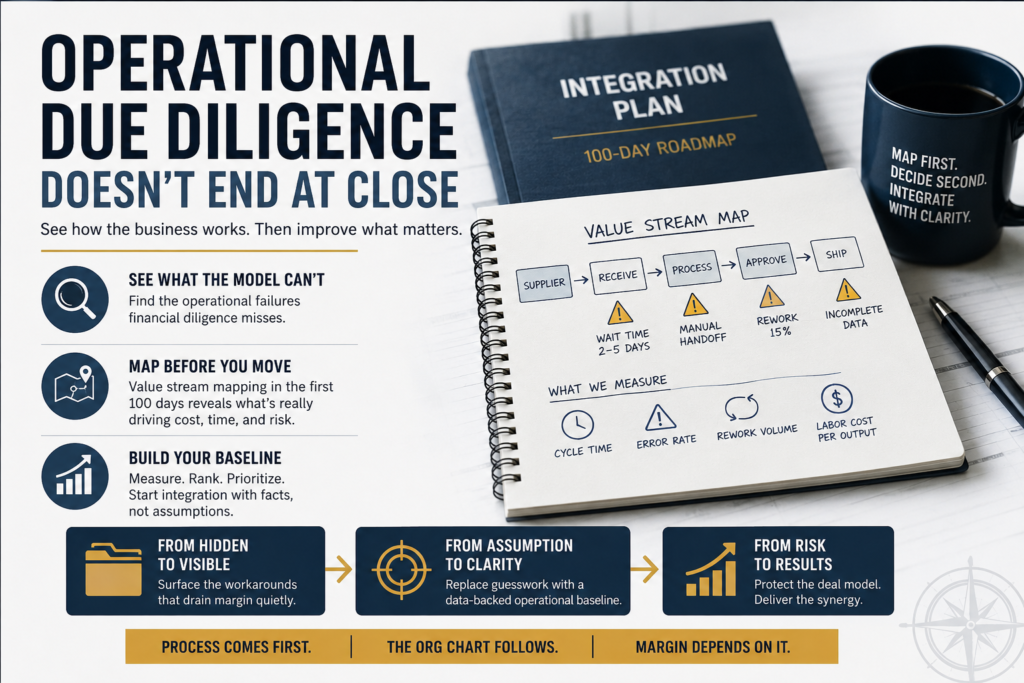
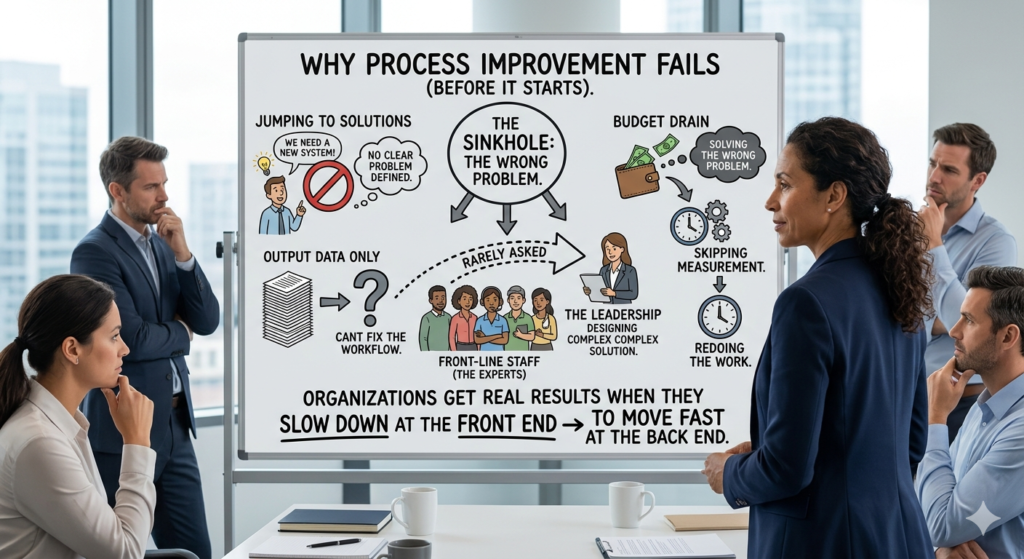
Every engagement begins with a structured assessment to identify where the organization is losing the most value — in cycle time, quality defects, rework, customer satisfaction, or capacity. This diagnostic creates a prioritized opportunity register, ranked by impact and feasibility.

2
Select the Highest-Leverage Project First

Rather than attacking everything simultaneously, the first project is chosen because it has a high probability of meaningful, measurable impact and visible organizational benefit. The goal is to generate a documented win within 60–120 days that employees can see and leadership can celebrate.

3
Build Internal Capability Alongside Every Project

Every project is paired with training and skill development. Team members who participate in a process improvement project — and are certified — become believers. They have experienced the methodology working. That lived experience is the foundation of durable culture change.

4
Document, Celebrate, and Communicate the Win

Visible success changes culture faster than any mandate. When a team reduces a key process error rate by 80%, that story spreads. When leadership publicly recognizes the team and quantifies the impact, the message is received: this approach works, and it is supported here.

5
Sequence the Next Project, Expanding Capability

Each completed project creates a pool of trained practitioners who can mentor colleagues on the next initiative. The program expands organically, with growing internal competency and an accumulating library of proof points. This is how culture actually transforms — through demonstrated behavior, not declared aspiration.

The cumulative effect of this approach is profound. Within 12–18 months of a properly sequenced program, organizations typically have a cohort of trained Lean Six Sigma practitioners, two to four documented improvement projects with financial impact, and — critically — a workforce that has experienced successful change firsthand. Resistance gives way to appetite. Teams begin identifying their own problems to solve. The culture has shifted, not because it was commanded to, but because evidence accumulated.

90%
Error rate reductions documented in WHP engagements
50%
Cycle time reduction achieved for process improvement clients
$20M+
Documented financial impact across client engagements

Why Windy Hill Partners

Windy Hill Partners was built around a single conviction: organizations don't need bigger consulting teams. They need better ones — practitioners with deep expertise, genuine sector knowledge, and a commitment to building client capability rather than client dependency.

Our founder brings over 20 years of Lean Six Sigma and process improvement experience across healthcare, financial services, higher education, insurance, government, and mid-market operations, with an MBA, PMP, and CSSBB. That isn't a credential collection — it's a practitioner's track record, built on documented results across complex organizations.

Unlike large firms where your project may be staffed by analysts two years removed from their MBA, Windy Hill Partners engagements are led by a seasoned Black Belt practitioner from day one through close. The person who scopes your project is the person executing it — and teaching your team alongside it.

Our approach is deliberately structured to produce results you can see and measure within the first 90 days, build internal capability that outlasts the engagement, and position your organization to sustain and expand improvement work independently. We have no interest in creating dependency. We have every interest in making you successful enough to become a reference.

If your organization is experiencing process pain — backlogs that don't clear, error rates that don't improve, cycle times that erode customer satisfaction and employee morale — the answer is not a two-year transformation program with a seven-figure price tag. The answer is a focused, well-scoped, expert-led improvement project that produces a documented win and builds the internal competency to replicate it.

That's what we do. That's all we do. And we'd welcome the conversation.

Ready to Begin the Conversation?

A 30-minute diagnostic call costs nothing. Understanding where your highest-leverage opportunity lives is where every engagement starts.

Schedule a Discovery Call